In Vino
Where 6 Saryan Street, central Yerevan
Since 2012
The wine bar that gave Saryan Street its name for wine. Around 200 Armenian wines among about 1,500. If you want to compare Areni from different producers side by side, start here.
Norq Garden GalleryGuidesArmenian wine
People in this part of the world have made wine for more than 6,000 years. Yerevan is where you can taste most of it without leaving the city. The grapes to ask for, the places to drink them, and a tasting in our family's cellar.
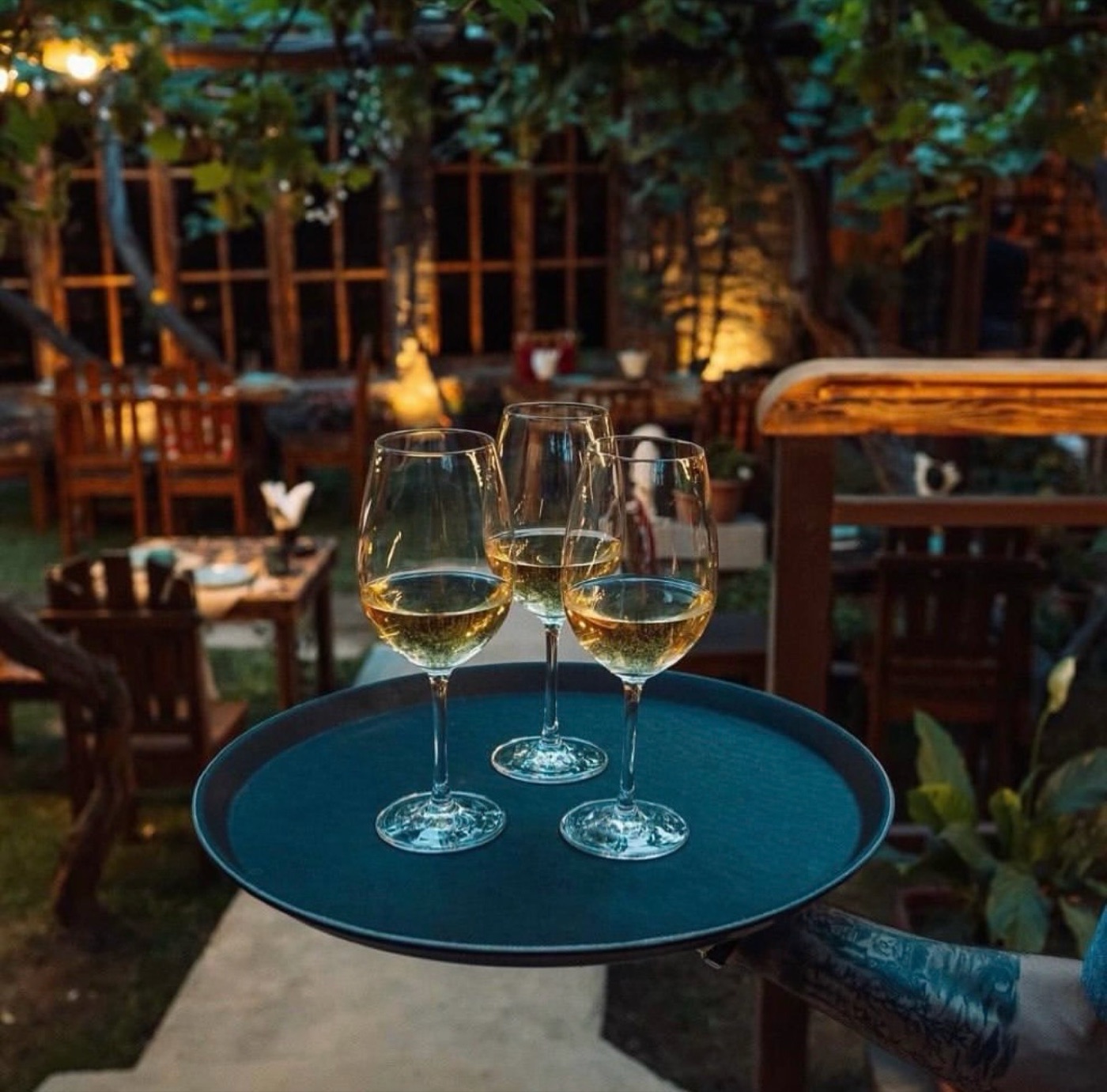
Armenia grows hundreds of native grape varieties, and most wine lists in Yerevan are built around a handful of them. Learn these names and you can order anywhere in the city.
| Grape | Colour | What to expect |
|---|---|---|
| Areni | Red | The best known Armenian red, from Vayots Dzor. Light in colour, fresh acidity, soft tannins. Sour cherry, herbs, a little spice. Often compared to Pinot Noir. |
| Voskehat | White | The name means golden seed. Floral, stone fruit, medium body. Almost every Armenian white wine producer makes one. |
| Kangun | White | A Soviet-era cross bred for brandy, now also made as dry and sparkling wine. Citrus, quince, honey. |
| Mskhali | White | An old variety of the Ararat valley, used for brandy, dry whites and dessert wines. |
| Lalvari | White | From Tavush, in the green northeast. Light, high acidity, green apple. Good as sparkling wine. |
| Haghtanak | Red | The name means victory. A red-fleshed grape with Saperavi as one parent. Deep colour, dark berries, pepper. Built to age. |
| Khndoghni | Red | Also called Sireni. Historically grown in Artsakh. Firm tannins, dark fruit, earthy. |
| Chilar | White | An old Vayots Dzor grape that almost disappeared, now revived by a few producers, sometimes fermented in clay amphorae called karas. |
In a cave near the village of Areni, in Vayots Dzor, archaeologists found what is still described as the oldest known winery in the world. The site, called Areni-1, dates to around 4100 BC, roughly 6,100 years ago. It held a clay press about a metre long, a fermentation vat, storage jars and grape seeds. The find was published in the Journal of Archaeological Science in January 2011.
The cave is about two hours' drive south of Yerevan, and the village of Areni holds a wine festival on the first weekend of October. If you have a free day, go. If you do not, the wine comes to you.
Where 6 Saryan Street, central Yerevan
Since 2012
The wine bar that gave Saryan Street its name for wine. Around 200 Armenian wines among about 1,500. If you want to compare Areni from different producers side by side, start here.
Where 2 Tamanyan Street, near the Cascade
A full restaurant with a serious Armenian list. Useful when you want to eat properly and drink well in the same place, a few steps from the Cascade.
Where central Yerevan
A smaller bar that specialises in rare and limited Armenian bottles. Ask what came in recently.
A word on Saryan Street. It is still called the wine street, and Yerevan Wine Days still takes place there and on the streets around it. But several of its wine bars have closed in recent years, and cafes have taken their place. Go for In Vino. Do not expect a street of wine bars.
Where 94 Sero Khanzadyan Street, Old Nork, 15 minutes by car from Republic Square
Length About 90 minutes, up to 10 guests
Booking Advance reservation only, price on request
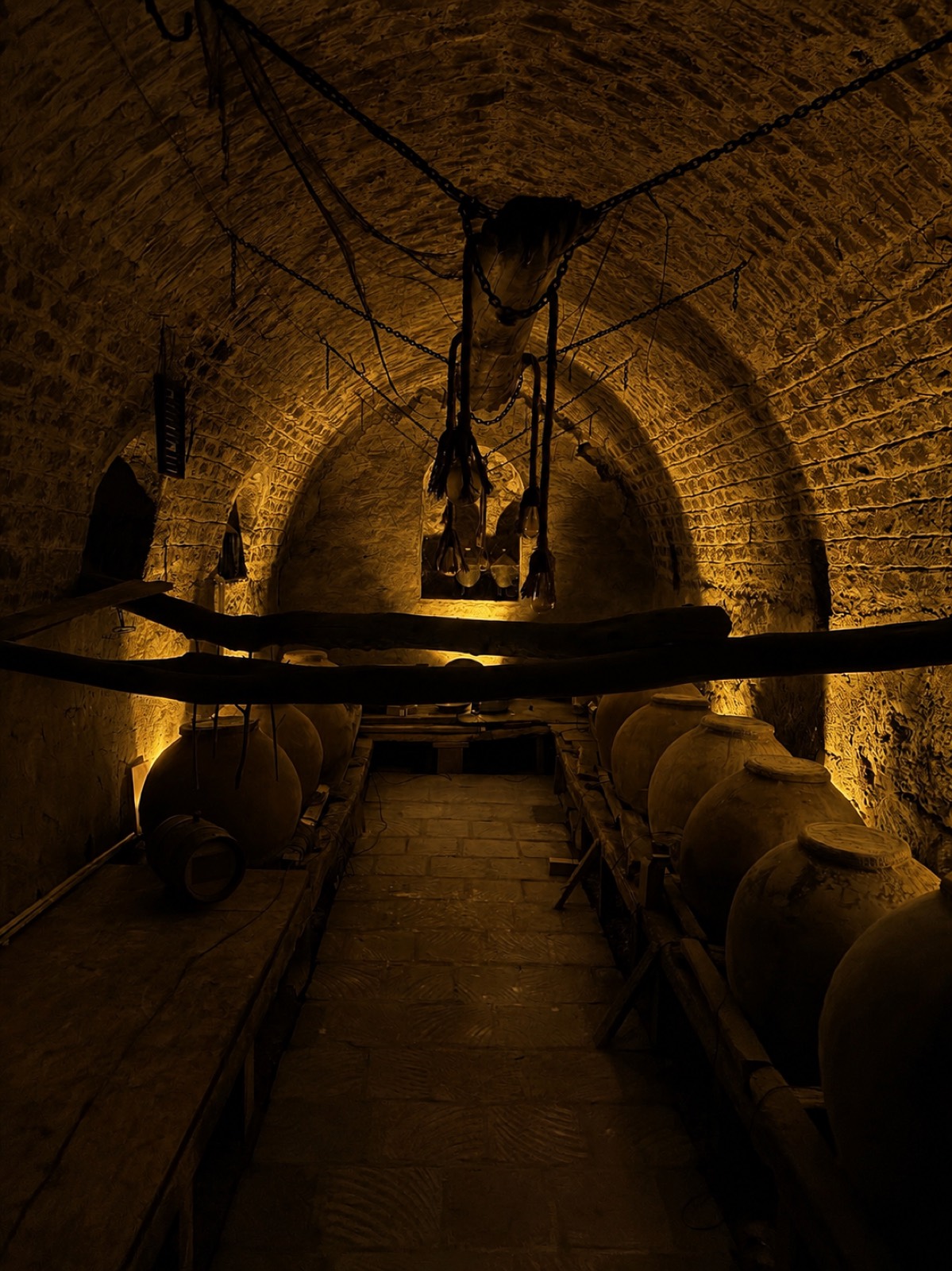
This is our house, so read this one with that in mind. The cellar under it belonged to Hovhannes Derdzakyan, and for generations the men of Old Nork came down here to drink wine and talk. It is more than 170 years old. Vaulted brick, stone floors, candlelight.
The tour is private and led by the grandmother of the family. She walks you through the estate, tells the stories of Hovhannes's survival and his winemaking, and takes you down into the cellar. It ends with a tasting of five boutique Armenian wines and Hovhannes's Table: aged cheeses, dried fruits, walnuts and homemade pakhlava.
Without a booking, you can still drink in the garden from Friday to Sunday. Our house wines include Cuvée Hovhannes, a fresh Mskhali, and Nuits-Saint-Norq, a light red with soft tannins. If you order a bottle, ask our host to take you down to the cellar to choose it yourself. In the evening the music runs from Armenian jazz to Japanese city pop.
No wine guide to Yerevan is complete without brandy. The Yerevan Brandy Company was founded in 1887 by Nerses Tairyan, later became part of Shustov and Sons, and has belonged to Pernod Ricard since 1998. Its brand is ARARAT, and its building at the end of Victory Bridge is one of the city's landmarks. Book a tour on the company's website. It takes you through the museum and the ageing cellars to a tasting. For something less visited, the Armenian-owned Noy brandy factory, across the river on the site of the old Erivan fortress, runs its own cellar tours.
You will hear Armenian brandy called cognac. That name is being phased out under an agreement with the European Union, and new bottles will say Armenian brandy. You will also hear that Churchill drank it every day. It is a good story, and that is probably all it is.
In our garden, ARARAT goes into all three of our signature cocktails. The Apricot Spritz is ARARAT brandy, sparkling wine and apricots from the tree in our garden.
For red wine, Areni, from Vayots Dzor. For white, Voskehat. If you only try two Armenian wines, try those.
In Vino on Saryan Street pours many Armenian wines by the glass. For a guided tasting in a historic cellar, Norq Garden Gallery in Old Nork offers the Heritage Tour and Tasting with five boutique Armenian wines, by reservation on +374 55 210 048.
On the first Friday to Sunday of June, on Saryan Street and the streets around it.
It is made in a similar way, but only brandy from the Cognac region of France may be called cognac in the European Union. Armenian brandy is being relabelled as Armenian brandy under the agreement between Armenia and the EU.
In the Areni-1 cave in Vayots Dzor, Armenia, dated to around 4100 BC. It is about two hours' drive south of Yerevan.