Old Nork, Yerevan: the village on the hill
Before it was a district of Yerevan, Nork was a village of gardeners and potters on the heights above the city. Our family's house has stood here since around 1850. This is what we know about the place, and how to find us in it.
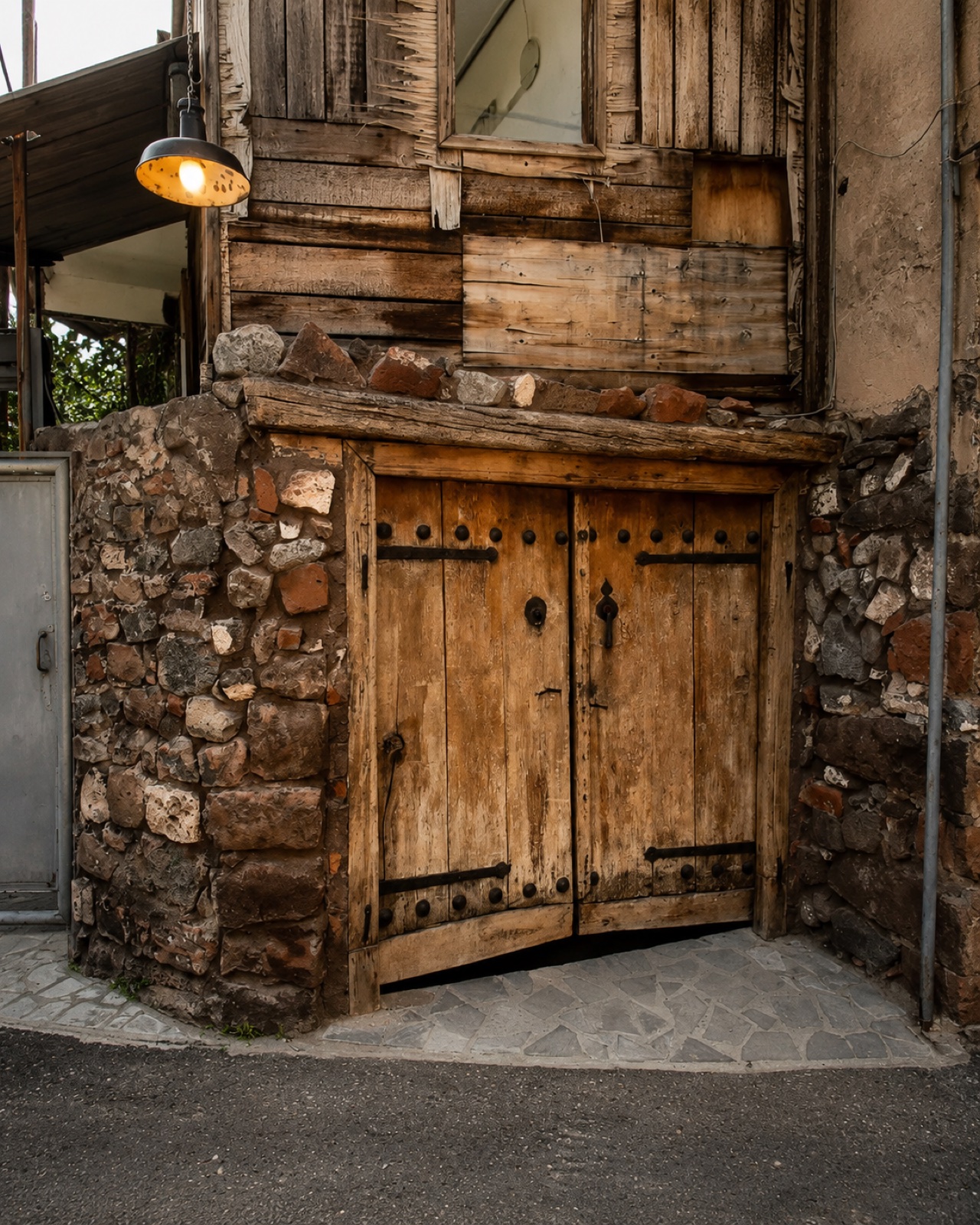
Old Nork (Hin Nork, Հին Նորք, also spelled Norq) is the historic hillside quarter of Yerevan, northeast of the centre, in the Nork-Marash district. It was a separate village until it joined Yerevan in 1837. Today it is a quiet area of old stone houses, many with vaulted wine cellars, about 4.4 km by road from Republic Square. Come for the lanes, the church, the views over the city and, on clear days, Mount Ararat. Do not confuse it with Nor Nork, the large Soviet-era district further east.
Nork, Norq, Hin Nork, Nor Nork: which is which?
| Name | What it means |
|---|---|
| Nork / Norq | The same Armenian name, Նորք, written two ways in Latin letters. Most English maps write Nork. We write Norq. |
| Hin Nork | Old Nork. The original village quarter on the hill, where we live. |
| Nork-Marash | The administrative district that contains Old Nork. Formed in 1996 by joining Nork with Nor Marash. The smallest of Yerevan's 12 districts by population. |
| Nor Nork | New Nork. A separate, much larger district to the east, built in Soviet times. The Yerevan Zoo is there. |
A short history of Nork
Nork sits on the heights where the Kotayk plateau slopes down toward the Ararat valley. For a long time it lived as a village beside the city rather than inside it. Its people were known as gardeners and potters. Orchards on the slopes, kilns in the yards, wine in the cellars.
Nork became officially part of Yerevan in 1837. The historian Yervand Shahaziz, in his book Old Yerevan (1931), writes that this happened at the request of the residents themselves, and that Nork kept its character as a separate quarter. He also records an older story: that the village was emptied by the deportations of Shah Abbas in 1605, then resettled by seven families from the village of Nors in Nakhichevan, who brought the name with them.
There is a second explanation of the name. In Armenian, nork can mean a newly planted orchard. Given what the village was known for, we like both versions.
The church of the quarter tells the rest of the story in short. It was destroyed by the earthquake of 1679, rebuilt in the early 1900s, blown up in the 1930s, and rebuilt again from 1990 by people from the district. It stands today as the Holy Mother of God church.
The cellars of Old Nork
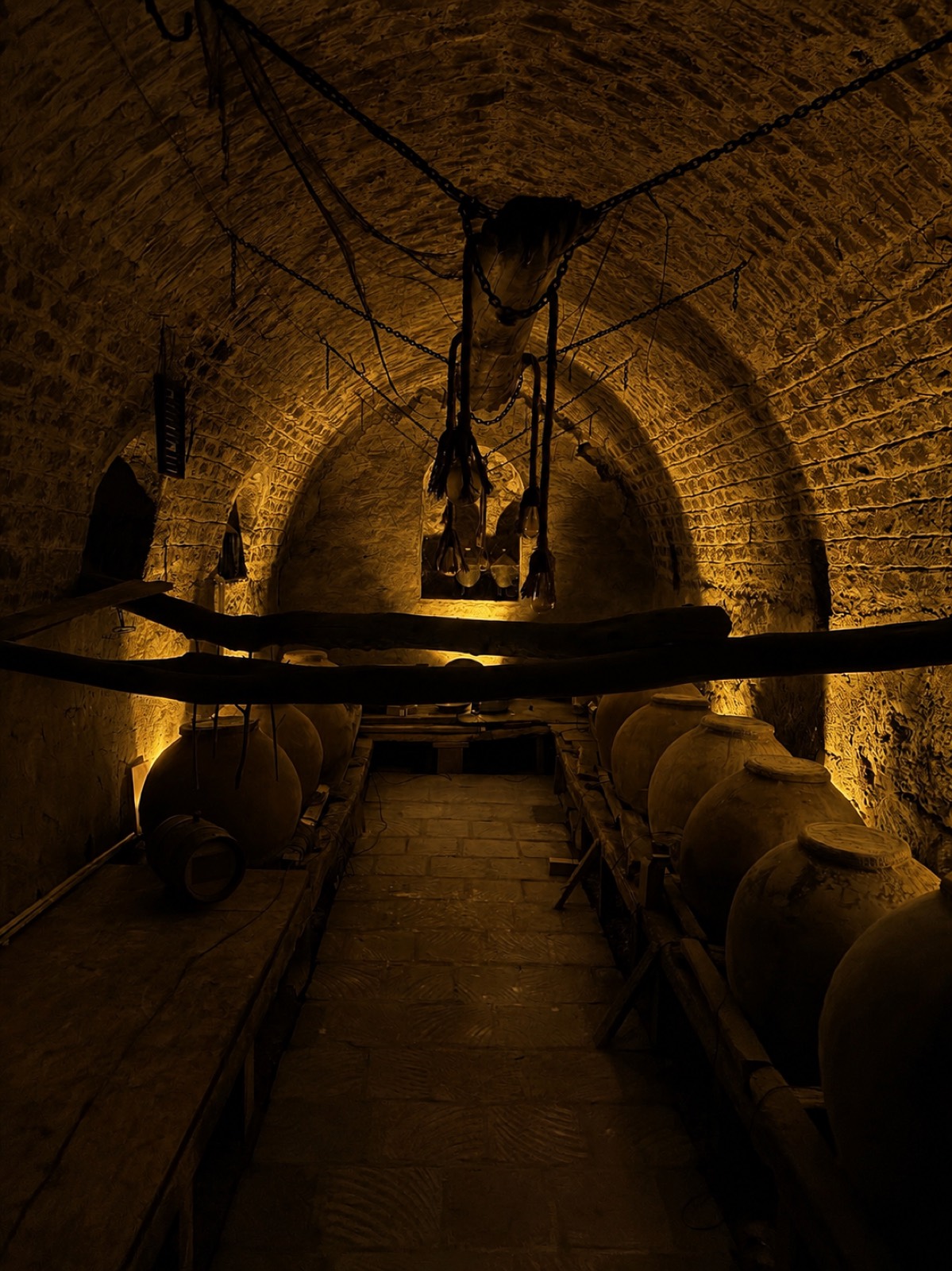
Walk through Old Nork and you will notice how many old houses sit on top of something. Many of them have vaulted wine cellars, a reminder of when every family here made wine from its own vines.
Ours belonged to Hovhannes Derdzakyan. The elders of the neighbourhood still remember it as the place where the men of Old Nork gathered to drink wine, to talk and to celebrate. The house has stood for more than 170 years. Five generations of the family have lived in it, through genocide, revolution, war and the making of modern Armenia. Today the cellar is open to guests, and the house is a family estate museum.
What to see in and around Old Nork
Holy Mother of God church (Surb Astvatsatsin)
On Armenak Armenakyan Street, about ten minutes on foot from us. Rebuilt and reopened in the 1990s on the site of the old village church. Quiet on weekdays, busy on Sunday mornings.
The lanes and the views
The pleasure of Old Nork is walking it. Narrow lanes, stone walls, fig and apricot trees leaning over gates, old houses next to new ones. The quarter sits roughly 180 metres above Republic Square, so on a clear day the whole city opens up below you, with Mount Ararat behind it. Mornings in spring and autumn are best.
Yerevan TV Tower
The red and white tower on Nork Hill, a little over two kilometres south of us, is the tallest structure in Armenia at 311.7 metres. It was built between 1974 and 1977. You see it from almost everywhere in the city, which makes it a useful landmark when you are lost in the lanes.
Within a short taxi ride
- Upper Abovyan Street, about a kilometre west, with the Museum of Folk Art of Armenia and the Hrant Matevosyan Museum.
- Victory Park and Mother Armenia, the monument that looks over the city from the north.
- Yerevan Zoo, in Nor Nork to the east.
- The Cascade, about two kilometres away in a straight line, longer by road.
One correction we make often: the Yerevan Botanical Garden is not in Nork. It is in Avan, a few kilometres to the northeast.
How to get to Old Nork
Old Nork is about 4.4 km by road from Republic Square. By taxi it usually takes 10 to 20 minutes, depending on traffic. Most people in Yerevan use the GG or Yandex Go apps, which show the price before you book.
Walking up from the centre is possible, but it is a steady climb and the lanes are uneven. If you want to walk, take a taxi up and walk down.
Finding our gate
There is no sign on the street. That is on purpose, but it means you need directions. Ask your taxi to stop at 54 Sero Khanzadyan Street. From there, walk along the lane to number 94. Our wooden gate is set in the stone wall. If you cannot find it, call us on +374 55 210 048 and someone will come out.
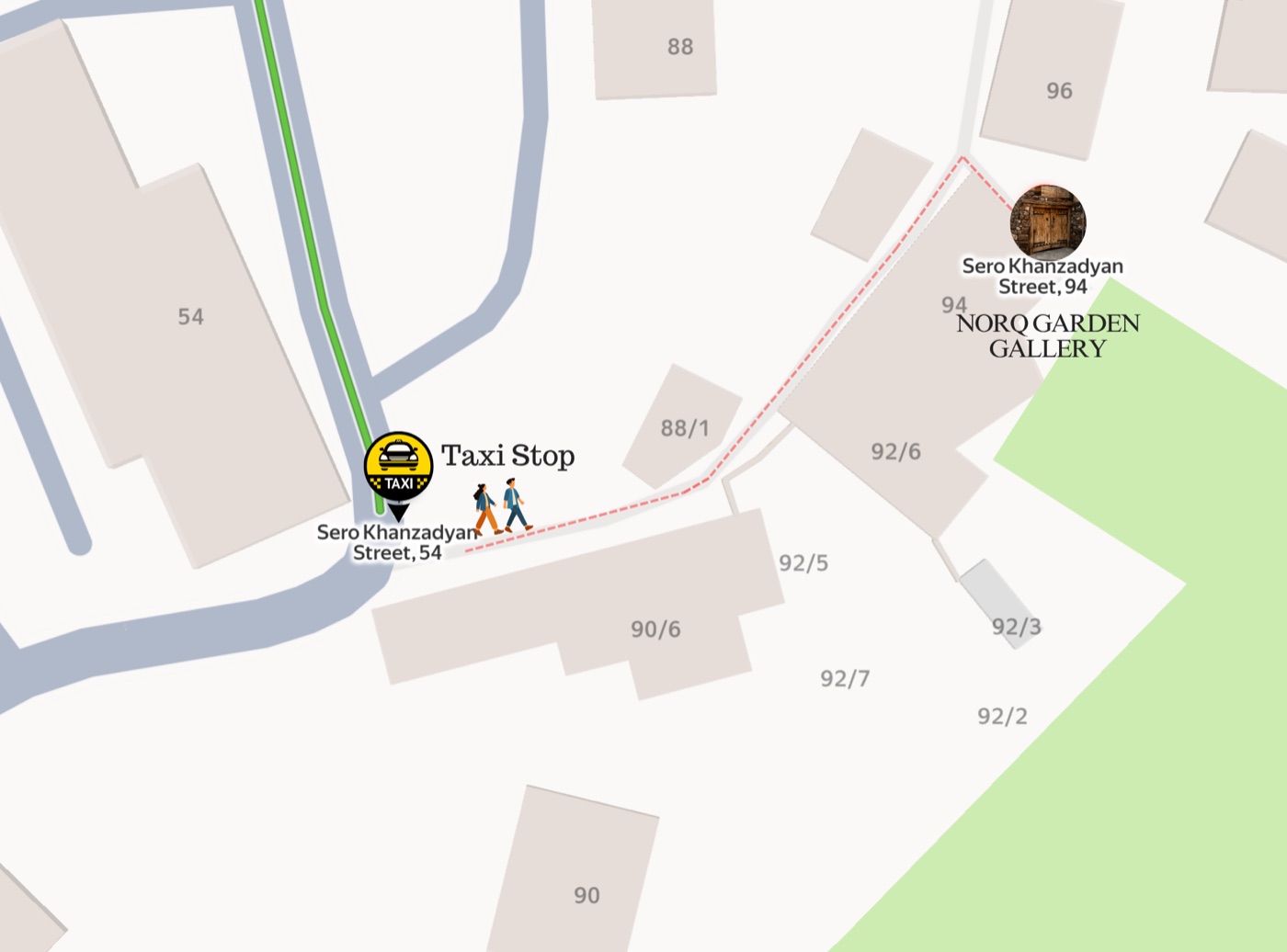
The street is named after Sero Khanzadyan (1915 to 1998), the Armenian novelist from Goris who wrote Mkhitar Sparapet. He served as an officer on the Leningrad front in the Second World War and is buried in the Komitas Pantheon.
Questions guests ask us
Is Old Nork the same as Nor Nork?
No. Old Nork is the historic village quarter on the hill, in Nork-Marash. Nor Nork, New Nork, is a separate Soviet-era district further east.
How far is Old Nork from the centre of Yerevan?
About 4.4 km by road from Republic Square. Usually 10 to 20 minutes by taxi.
Is Old Nork worth visiting?
If you like places where people still live the way they always did, yes. There are no big sights. There are old houses, gardens, a church, a view and, in our case, a cellar from the 1850s. It is the opposite of the centre, which is the point.
Is it Nork or Norq?
Both. The Armenian is Նորք. English maps mostly write Nork. We write Norq.